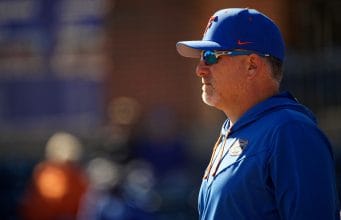
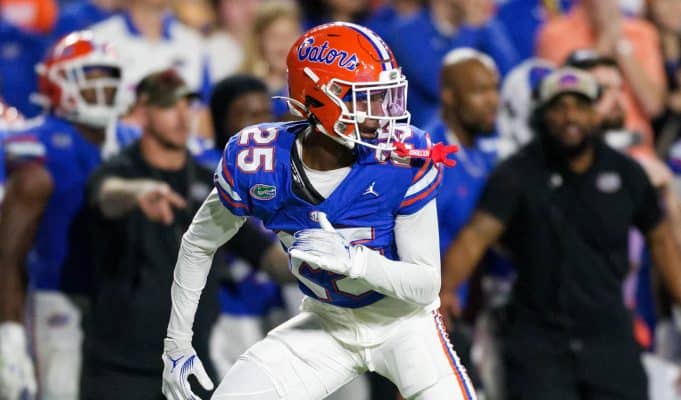
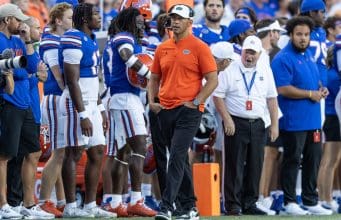
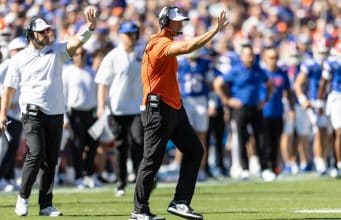
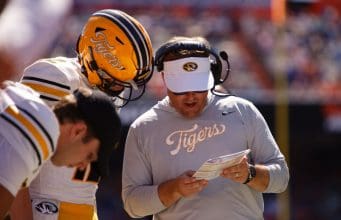

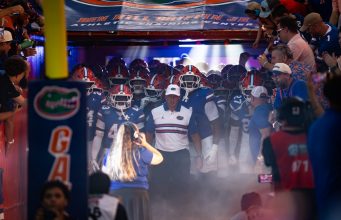







To debut the Southern Football Insider weblog, I want to talk a little bit about what distinguishes Urban Meyer and his approach to coaching from many of the other coaches he finds himself across the field from on Fall Saturdays. While it is certainly true that Urban Meyer is an excellent “ball” coach: having good tactical instincts on game day, understanding of substitution patterns to create mismatches, being flexible enough to abandon aspects of a game plan that aren’t working and to improvise a new one. These are all hallmarks of excellence in the tactical areas of game day coaching. But candor and understanding of the level of competence in the coaching ranks of the SEC would force us to admit that there are a number of coaches who do these things well -in some cases perhaps better than Urban Meyer. If that is the case, what is it that sets him apart as a coach whose success is now virtually predictable? Is the secret to be found in recruiting? Certainly this is partly the case, but it’s not all, nor even half the picture. Many programs in the SEC recruit and evaluate young talent at a very high level, as evidenced by not only subjective recruiting rankings from the recruiting entertainment services such as ESPN, but also on the field results, which is the ultimate measure of recruiting success.
But even the latter is not a consistent predictor of success. By way of example we might cite the case of the Georgia Bulldogs coach Mark Richt, who by all measures is a truly gifted recruiter. In fact, this is so much the case that there have been seasons during which Mark Richt had a more talented team (on paper) than Urban Meyer, and yet lost the match. These losses occurred not through game day blunders (there have been those, but mostly early in his career as a head coach), but before the even the lights came on in the stadium, or the coin was tossed that day. Recall, it was only two seasons ago that “the celebration” marked a ‘W’ for Richt against UF, whose record versus Meyer is an unremarkable 1-4. This is not a statistic that will win you many admirers in Georgia, and not a statistic that reflects the truth of the recruiting picture: Georgia has had equal or greater sheer talent in the recent past. In last year’s debacle for the Bulldogs, they had (we are informed by the experts) the better QB and RB corps in Matt Stafford (the #1 selection in the 2009 NFL Draft) and Knowshon Moreno (a first rounder), a wide receiver as good as any on Florida’s roster in A. J. Green. Their OL, while suffering some injuries, had depth and talent, including All-SEC stalwart LT Clint Boling. On defense, Geno Atkins and WLB phenom Rennie Curran are a sure-fire NFL prospects, as was Asher Allen (22nd pick, 3rd Round of the 2009 NFL Draft). But beyond Georgia, Alabama, Ole Miss, and LSU have recruited at a very high level in recent years. Both Bama and LSU have coaches who have won recent BCS championships, while Ole Miss is headed up by erstwhile veteran Houston Nutt, whose Arkansas team made it to the SEC Championship back in 2006. The 2008 NFL draft saw both Nutt’s feature backs (McFadden and Jones) go in the 1st Round. His recruiting cupboard, stocked full by former head coach Ed Orgeron has an NFL QB and RB, and a DL that would make some NFL clubs green with envy -not to mention All-SEC OT Michael Oher who was taken with the 22nd pick in the 1st Round in 2009. In the East, the Old Ball coach has a player or two as well, and Tennessee always has top-shelf defensive talent. It isn’t merely recruiting.
Though Florida has some advantages in the aforementioned areas, the aspect that sets Urban Meyer apart from other coaches is seen in two little words: organizational development. As evidence of this, you have no further to look than the comments of the characteristically frank Nick Saban, head football coach at Alabama. Often, the best way to evaluate a coach is by what his peers are saying about him. Respect is grudgingly awarded by such savvy, driven, demanding figures as you’ll find in SEC coaching offices. So when Nick Saban speaks about Urban Meyer, I listen intently. At the most recent edition of the SEC’s annual Media Days event, Saban was asked what things he liked about coach Urban Meyer. In case you missed them, his responses were revealing:
Q. Obviously, you have ties to Bill Belichick. Urban Meyer has also befriended him. Do you see any Belichick tendencies in Coach Meyer? What do you think he’s been able to do to kind of turn Florida into the national championship program it’s become?
COACH SABAN: I think, first of all, Urban is a great coach, surrounds himself with outstanding people, has a good staff. They work about as hard as anybody I know. I mean, we’re kind of a blue-collar program. We have a tremendous amount of respect for that.
I know that Bill is like that. But I think Urban was like that before he ever met Bill. I think that’s why they have a tremendous amount of success in recruiting, and they do a phenomenal job of developing the players that they have.
So I can’t make any comparisons to know what their relationship is. I don’t know that. I know I coached for four years with Bill Belichick. He was an outstanding coach. I probably learned as much from him in terms of organization, football, management, defining roles so that people understand what’s expected of them, as anybody that I’ve ever been around. Certainly, you know, his success proves that what he does, the process that he uses, it’s very effective.
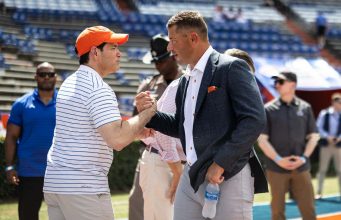
Saban is saying these things about a man in between him and his goals -an opponent. Truculent ST. Nick is not known as a flatterer. Both Saban and Meyer come to the SEC out of the Bill Belichick coaching tree. Respectively, by way of an assistant’s role under Belichick, and the other through a close personal relationship that has left a deep imprint. The similarities between these rivals coaches are more remarkable than their differences. But more to our point is their focus on organization development. When you read the foregoing quote from Saban, a few things stand out. Not merely the driven personality of Meyer, but the organizational skills he’s inherited through his close relationship with Belichik, and other coaching mentors. The same themes are prevalent in both the Alabama program and Meyer’s: player development: what you do with a talented player once he gets there is the difference between potential and accomplishment; organizational development: ensuring that a winning team culture is produced, with precisely articulated values and standards, and processes in place to achieve measurable goals.
Urban Meyer and staff measure everything. He is reported to have once joked that he was having his trainers measure the time it takes for players to make the trip from the locker rooms to the practice field, and how he could tell what to expect from practice based on this statistic. The story is apocryphal, of course, but the point is very salient: we don’t leave anything to chance. Meyer has been described by his peers as being one of the most organized and focused individuals they’ve encountered in the coaching profession, and this is reflected in the precision with which the various aspects of the program are run. Game planning is an area where Meyer’s focus on precision and measurement are fully realized. While film study and tendency notes are common features in successful game planning, Urban Meyer incorporates intensive statistical analysis and a robust quantitative approach that is fairly rare in college football, and much more the province of the most esoteric professional clubs. A baseball enthusiast and former minor league player, Meyer is a list keeper, and understands the importance of measurement in quality control and repeatability. You can’t learn from your mistakes if you’re guessing where you made them. Steve Spurrier once remarked that “statistics are for losers.” We all know what he meant: you don’t make excuses for losing. But taken at face value, this statement is misleading. Meyer made mention of this when he later publicly opined that, in fact, statistics are very important, and indicated that UF almost literally measures everything. This is business process engineering, and successful companies (and college sports teams are companies) use these approaches to their benefit.
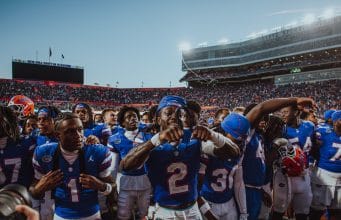
But beyond the numbers, there’s motivation and value inculcation. Meyer’s background in psychology gives him insight into the organizational ethos that permeates a football team, a perspective often lacking in even highly competitive programs. This “corporate” approach is reflected in seemingly trivial characteristics that are synergistically greater than the sum of their parts. Getting one hundred adolescent football players to focus on one goal, to maintain a high degree of personal accountability, to internalize organizational values and standards, and to be willing to sacrifice short term desires for long term goals is not something you merely teach, its something you have to model, develop, cultivate, measure, and personally emulate. And Florida does an excellent job in this area. It’s one of the things recruits notice when they visit: the camaraderie, the esprit, the focus and intensity, the pace and attention to detail. These are things that have to be constantly monitored and underscored, and to do this, practices must be developed to make these activities permanent features of the program. It is in these areas where Florida is really hands-down better than its competition. Again in this instance, the words of coach Saban are instructive:
“People who are role models for the principles and values of the organization, who buy in and understand the vision of what the organization is trying to accomplish, and have the personality to inspire other people to the vision. You know, that’s what team chemistry and leadership is all about.
“I think it’s also important that you establish a work ethic on your team, that your team understands they’re working to dominate the competition. It’s not relative to what they think hard work is; it’s what they need to do to dominate the competition in a very competitive, difficult, tough league, with a very difficult, tough schedule.
“It’s important that you have a group that is responsible for their own self-determination in terms of doing their job. You know, when I worked with Bill Belichick, we only had one sign in the whole building, and that was: Do your job. And it was defined for everybody, from the janitor, to the secretary, to the strength coach, to the equipment man to the coaches, to the players, everybody had an expectation of what their responsibility was to execute their job.”
This is Nick Saban saying that organizational development is the key to success on the field, and it’s him saying that Meyer does it better than anyone in the league. It’s in the subtext, but it’s there. You can sense the grudging admiration. Moreover, in response to a question about abnormal program attrition, Saban had this to say,
“We have a demanding program. I mean, when I say ‘demanding program,’ I’m not talking about football. We have a personal development aspect to our program that there’s principles and values in the organization relative to developing a successful philosophy, creating the right kind of habits, thoughts, habits and priorities that are going to help you make good decisions, whether it’s the Pacific Institute coming in, whether it’s a peer intervention program that address behavioral issues, drugs, alcohol, gambling, spiritual development, how to treat the opposite sex, macho man stuff, running your mouth, getting in fights.”
Organizational development. Meyer has implemented formal and informal roles that are a part of that process: from motivational expert Hiram deFries, to Director of Community and Player Relations Terry Jackson, to Program Coordinator Mark Pantoni -each having a role in inculcating the values and goals of the team.
So when we evaluate the football program at the University of Florida, and the means by which it has achieved its goals, we should look directly to the organizational genius of Urban Meyer as much or more so than his tactical acumen or recruiting prowess, which taken together, are the recipe for his spectacular rise to the top of his profession.
Add New Comment
Viewing 10 Comments
Thanks. Your comment is awaiting approval by a moderator.
Do you already have an account? Log in and claim this comment.
Add New Comment